




Cricket auction rules define how teams buy players. The three that matter most are the team purse (each team's total budget), the player base price (where bidding starts), and the bid increment (the minimum a new bid must rise by). Alongside those, organizers must set squad limits, player categories, unsold-player rules and a dispute process — and publish all of it before auction day.
A successful cricket player auction is not just about calling out player names and waiting for team owners to bid. Behind every smooth auction is a clear set of cricket auction rules.
Tournament organizers need to decide how much budget each team receives, what the base price of each player will be, how much every bid should increase, how many players each team can buy, and what happens when a player remains unsold.
Without these rules, even a well-planned local cricket tournament can quickly face confusion, disputes, incorrect budget calculations and arguments during bidding.
Whether you are organizing a local cricket league in India, a corporate cricket tournament, a box cricket competition, an academy league or a community tournament in Gujarat, a structured auction system makes the whole experience more transparent and more professional.
This guide covers everything organizers need to build fair, practical cricket tournament auction rules. If you are planning the wider event as well, it sits alongside our complete cricket tournament checklist.
What are cricket auction rules?
Cricket auction rules are the guidelines that define how players are bought by teams during a tournament auction. They usually cover:
- Team purse or auction budget
- Player base prices
- Bid increments
- Minimum and maximum squad sizes
- Player categories
- Maximum spending rules
- Unsold player rules
- Re-auction rules
- Reserved or retained player rules
- Final squad validation
The purpose is simple: every team should understand the auction process before the first player goes under the hammer.
For local tournaments this matters more, not less. Organizers are often managing multiple teams, dozens or hundreds of players, several player categories, and team owners who are genuinely competitive with each other.
Why local cricket tournaments need clear auction rules
Imagine an auction where one team believes it can buy 15 players while another believes the maximum squad size is 12. Or a team owner placing a bid without knowing the team no longer has the purse to cover it.
Those situations create disputes that had nothing to do with cricket. Clear player auction rules prevent them before they happen.
Five problems that unclear auction rules reliably produce:
01 Arguments about the remaining purse
When team budgets are tracked manually, mistakes happen fast. One wrong subtraction and nobody can say for certain whether a team can afford its next player.
02 Disputes about player prices
Team owners will ask why one player's bidding starts higher than another's. Clear player categories and a published base-price structure answer that before it becomes an argument.
03 Teams exceeding squad limits
Without defined minimum and maximum player limits, teams end up with incomplete or oversized squads — and the fix always comes at someone's expense.
04 Confusing bid increments
If the auction does not follow a consistent increment structure, participants lose track of what the next valid bid actually is.
05 Problems with unsold players
Decide in advance whether unsold players remain unsold, return for another round, enter a re-auction, or are assigned through another approved process.
The key principle: publish the rules before the auction starts, not while the auction is happening.
The complete cricket auction rules checklist
Before conducting your player auction, define every one of these:
| Auction rule | What you need to decide |
|---|---|
| Number of teams | How many teams will participate? |
| Team purse | What starting budget does each team receive? |
| Player categories | How will players be grouped? |
| Base price | What price does bidding start from? |
| Bid increment | How much does each new bid increase? |
| Minimum squad size | What is the minimum number of players required? |
| Maximum squad size | What is the maximum number of players allowed? |
| Maximum player price | Is there a spending limit for a single player? |
| Unsold player rules | What happens if nobody buys a player? |
| Re-auction rules | Will unsold players return later? |
| Reserved players | Are any players reserved or retained? |
| Budget validation | How will remaining purse be checked? |
| Dispute rules | Who makes the final decision if there is a disagreement? |
A good auction does not need complicated rules. It needs clear rules that everyone understands.
What is a cricket auction purse?
A cricket auction purse is the total budget available to a team for buying players during the auction. Every team starts with an assigned purse and uses it to build its squad.
For example, if a tournament gives every team 100,000 points, each team must use that budget strategically to purchase the players it needs.
The purse is what creates balance. A team cannot spend everything on the first few star players and then ignore the rest of its squad requirements. Owners have to think about which players are essential, how much budget to hold back, which categories are still unfilled, and how many players they still have to buy.
How to set cricket auction purse rules
There is no single perfect purse amount for every local tournament. The right figure depends on your structure. Consider:
- Number of players required — a squad of 15 needs a different budget structure from a squad of 8.
- Player categories — if you use categories such as star players, all-rounders, batsmen, bowlers, wicketkeepers and emerging players, the purse should let teams compete across all of them.
- Number of teams — more teams means more competition for popular players.
- Tournament format — a small box cricket tournament needs simpler rules than a franchise-style league.
- Points or currency — many local tournaments use points rather than real money, which keeps the strategy intact while making the auction easier to manage.
A worked purse setup
A tournament with 6 teams, 12 players required per team, equal starting purses and multiple player categories: the organizer gives every team the same starting budget and requires each to complete its squad within that limit.
Numbers should always be customised to your own tournament — team count, squad size and category mix all change what a sensible purse looks like.
What is a player base price in a cricket auction?
A player base price is the starting price from which bidding begins. If a player has a base price of 5,000 points, owners start bidding from that amount.
The base price does not represent the player's final value. It simply sets the starting point for competitive bidding.
How should organizers decide player base prices?
Base prices are one of the most important parts of auction design. Organizers can weigh:
- Player skill level
- Previous tournament performance
- Player category
- Experience
- Tournament format
- Local league rules
Most tournaments group players into categories to keep this manageable.
Example only
| Player category | Example base price | Purpose |
|---|---|---|
| Star player | 10,000 points | Higher starting category |
| All-rounder | 7,500 points | Balanced player category |
| Batsman | 5,000 points | Standard category |
| Bowler | 5,000 points | Standard category |
| Emerging player | 3,000 points | Developing player category |
Categories should suit your tournament. Some organizers use skill-based groups; others use Group A, B and C; some create specific categories for captains, senior players or emerging players. The most important thing is consistency.
What are bid increments in a cricket auction?
A bid increment is the minimum amount by which the next bid must increase.
For example: if the current bid is 10,000 points and the increment is 1,000 points, the next valid bid is 11,000 points.
Increments keep the auction organized. Without a defined structure, bidding becomes confusing and hard to control from the front of the room.
How to set the right bid increment
The right increment depends on the scale of your auction. Too small and bidding drags; too large and you kill the competition. Weigh your team purse size, player base prices, number of teams, tournament scale and the level of bidding competition you expect.
Example only
| Player base price | Example bid increment |
|---|---|
| 2,000 points | 500 points |
| 5,000 points | 1,000 points |
| 10,000 points | 2,000 points |
These are planning examples. Set increments that make sense against your own purse structure.
Recommended cricket auction rules for local tournaments
A sample structure — not universal rules.
| Rule | Example | Why it matters |
|---|---|---|
| Starting purse | Equal for every team | Creates a balanced starting point |
| Minimum squad | 10 players | Helps teams complete their squad |
| Maximum squad | 15 players | Prevents oversized teams |
| Player categories | Multiple groups | Makes player organization easier |
| Base price | Category-based | Creates structured bidding |
| Bid increment | Fixed amount | Keeps bidding consistent |
| Maximum player bid | Optional | Prevents excessive spending where required |
| Unsold players | Re-auction option | Provides a clear process |
| Remote participation | Allowed | Lets unavailable owners take part |
| Final squad check | Required | Confirms every team followed the rules |
Important: every local cricket tournament should customise these rules to its own format, player pool, team count and competition requirements.
How to conduct a cricket auction, step by step
A structured process makes even a large player auction manageable.
01 Register players
Collect the player information your tournament requires and make sure the list is complete before auction day.
02 Verify player information
Check player details and resolve duplicate or incorrect entries while there is still time to fix them.
03 Create player categories
Organize players by skill, experience, playing role or any tournament-specific requirement you have defined.
04 Set player base prices
Assign starting prices according to the approved category structure.
05 Define team purse rules
Give every team a clearly defined starting budget, and confirm the owners know it.
06 Set bid increments
Decide how bidding will increase and communicate the increment structure before the auction opens.
07 Define squad limits
Set both the minimum and the maximum number of players per team.
08 Publish the rules
Share the complete rule set with team owners, players, auction coordinators and tournament staff — in writing.
09 Conduct the live auction
Present each player and run the bidding exactly as the published rules describe.
10 Track bids and team budgets
Record every successful bid accurately and update the buying team's remaining purse. This is the single hardest part to do by hand at speed.
11 Confirm sold and unsold players
Record the outcome for every player, and keep the unsold list separate for whatever round comes next.
12 Finalize the teams
Before the room empties, verify that every team meets its squad requirements, stayed inside the budget rules, and has valid player records.
Cricket auction budget rules every organizer should define
An auction budget is not just a number announced at the start. Define how it behaves throughout the event:
- Starting purse — every team knows its budget before bidding opens.
- Remaining purse — updated after every successful purchase, and visible to the owner.
- Squad completion — teams must not spend so heavily early that they cannot fill the squad.
- Maximum player spending — optional, but some tournaments cap what can be spent on one player.
- Final budget validation — before squads are confirmed, check every team against the approved structure.
Common cricket auction mistakes to avoid
01 Changing rules during the auction
The fastest way to create a dispute.
Better approach: finalize and publish the rules before auction day.
02 Using unrealistic base prices
Set them too high and players go unsold; too low and the structure stops reflecting your intended strategy.
Better approach: build a logical category structure and price against it.
03 Setting confusing bid increments
Participants should know the next valid bid instantly, without doing arithmetic.
Better approach: define increments clearly before bidding begins.
04 Forgetting squad limits
A team can end up with too many players, or too few to field a side.
Better approach: define minimum and maximum player limits and enforce them live.
05 Tracking budgets manually
Manual calculations fail under fast-paced bidding — and the error is usually found after the player is sold.
Better approach: use a structured digital system to hold auction information.
06 Having no unsold player rule
Deciding this at the last minute, in front of the room, is how auctions stall.
Better approach: define the process before the auction begins.
07 Not testing the auction process
First-time organizers usually discover their process problems during the live event.
Better approach: review rules, player data, categories and auction flow in advance.
How sports technology is changing local cricket auctions
Local tournaments are getting more organized. Instead of running everything through Excel sheets, WhatsApp messages, paper lists and manual calculations, organizers can now manage the same information in a structured system.
That matters most when a tournament involves multiple teams, a large player pool, competitive bidding, remote team owners, sponsors and a live audience.
The goal of technology is not to make a cricket auction complicated. It is to make the rules easier to apply consistently — and to keep clear records of players, teams, bidding, auction results and tournament information.
How CrickHunt helps organizers run more structured cricket auctions
Writing good auction rules is the first step. Applying them consistently during a live auction is the harder one.
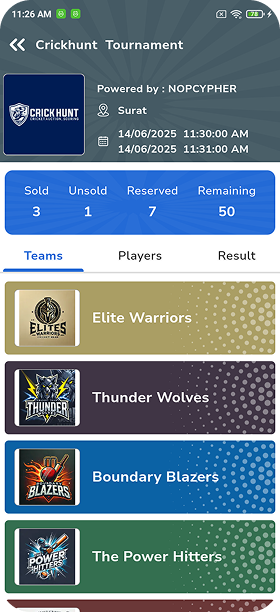
CrickHunt is built for cricket tournament organizers who want to run player auctions and tournament operations digitally. It supports live player auctions and gives organizers the tools to manage auction information and teams as the bidding happens.
It also supports remote bidding, so team owners can take part from a mobile device or laptop. For local tournaments, that is often the difference between a full auction and one missing three owners.
CrickHunt's capabilities include:
- Live player auctions
- Remote bidding
- Team owner views
- Real-time auction information
- Player and team management
- Auction and scoring overlays for live streaming
- Sponsor and custom banner opportunities
- Tournament and season-based management
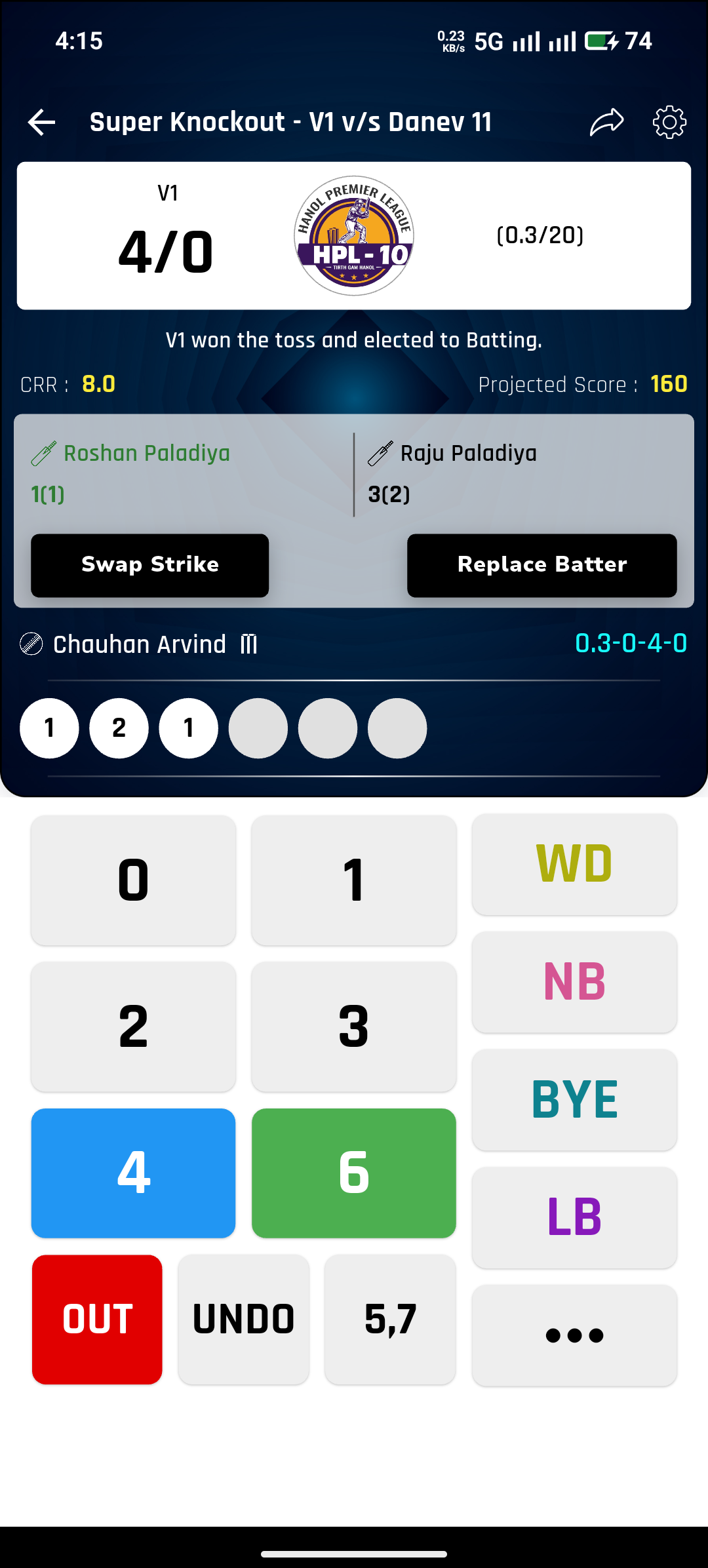
- Ball-by-ball scoring
- Match history and statistics
The advantage for organizers is continuity. Instead of treating the auction as a standalone one-day event, it becomes the first stage of a tournament that carries through to team management, matches and scoring — with the squads already correct because they came out of the auction itself.
If you are still deciding what to look for in a platform, our guide to 10 features to look for in cricket auction software covers the evaluation in detail.
7 practical tips for running a smooth cricket auction
Tip 1 — Finalize your rules before auction day
Do not make important decisions while bidding is already under way. Purse rules, base prices, increments and squad limits should all be settled in advance.
Tip 2 — Keep player categories simple
Too many complicated categories confuse participants. Use groups your team owners can hold in their heads.
Tip 3 — Give every team clear budget information
Owners should understand their purse before the auction begins, and how budget restrictions affect the way they build a squad.
Tip 4 — Choose practical bid increments
Increments should keep the auction competitive without making it slow. Test them against your base prices before the event.
Tip 5 — Explain unsold player rules early
Tell participants exactly what happens when nobody bids for a player — before the first player goes unsold, not after.
Tip 6 — Test your auction setup
Review player information, team information, categories, base prices, bid increments and the rules themselves before the live event begins.
Tip 7 — Think beyond the auction
A tournament does not end when the last player is sold. Plan how you will manage teams, matches, scoring, statistics and future seasons — an integrated approach makes the whole event easier to run.
Frequently asked questions about cricket auction rules
1. What are the basic rules of a cricket auction?
Basic cricket auction rules include a team purse, player base prices, bid increments, squad limits, player categories, and rules for sold and unsold players.
Organizers should publish all of these before the auction begins, so every team owner is bidding under the same understanding.
2. How does a cricket auction purse work?
A cricket auction purse is the total budget available to a team for buying players, and every successful bid reduces the remaining balance.
Because the purse must cover the full squad, owners have to manage it strategically rather than spending heavily on the first few players.
3. How do you decide the base price of a player in a local cricket tournament?
Set player base prices from player categories, skill level, experience, tournament format and your local league rules.
The structure matters more than the exact numbers: keep it consistent across the player pool and communicate it clearly before auction day.
4. What is a bid increment in a cricket auction?
A bid increment is the minimum amount by which the next bid must increase.
For example, if the current bid is 10,000 points and the increment is 1,000 points, the next valid bid is 11,000 points. A consistent increment keeps bidding fast and unambiguous.
5. How much purse should each team get in a local cricket tournament?
There is no universal purse amount — it depends on the number of players per squad, the number of teams, your player categories, the tournament format, and whether the auction uses points or currency.
Start from the squad size: the purse must comfortably cover a complete squad, with enough room left for competitive bidding on the players teams actually want.
6. Can local cricket tournaments use points instead of money for player auctions?
Yes. Many organizers structure auctions using points rather than real currency.
Teams still compete strategically within a defined budget, but the tournament avoids handling actual money during the event.
7. What happens when a player remains unsold in a cricket auction?
That depends entirely on your tournament rules — an unsold player may stay unsold, return in a later round, or enter a re-auction.
Whichever you choose, decide it before the auction starts and announce it with the rest of the rules.
8. Can team owners participate remotely in a cricket auction?
Yes. Online cricket auction platforms can support remote participation, letting team owners bid from different locations on a compatible device.
CrickHunt supports remote bidding alongside the live auction, so owners in the hall and owners on their phones bid into the same auction.
9. How can organizers prevent disputes during a cricket player auction?
Publish clear rules in advance, define purse and squad limits, use consistent bid increments, record every outcome accurately, and name the person who decides disagreements.
Almost every auction dispute traces back to a rule that was assumed rather than written down.
10. Which software can help conduct an online cricket auction?
CrickHunt is an online cricket auction and tournament management platform built for cricket organizers.
It supports live player auctions, remote bidding, team management, and the wider tournament workflow including scheduling, ball-by-ball scoring and statistics.
Final thoughts: good auction rules make better tournaments
A successful player auction starts long before the first bid. Organizers need a clear plan for team purse, player base prices, bid increments, player categories, squad limits, budget rules, unsold players and final team validation.
The best cricket auction rules are not the most complicated ones. They are the rules every participant understands and the organizer can apply consistently, at speed, in a room full of people who all want the same player.
For local tournaments in India, and for growing cricket communities across Gujarat and elsewhere, a structured auction makes the whole event feel more transparent, more professional and more worth turning up for. And as tournaments grow, sports technology helps organizers move past manual spreadsheets and disconnected tools — with one platform carrying the event from building teams through to managing matches and scoring the season.
Plan your cricket auction with CrickHunt
Set your purse rules, base prices, bid increments and squad requirements clearly — then run the auction on a platform built for it. CrickHunt supports live cricket auctions, remote bidding, teams, tournaments and scoring in one place.