
What is cricket tournament management?
Cricket tournament management is the process of planning, organizing and running a cricket competition from registration to the final result. It covers player and team management, tournament rules, match scheduling, player auctions where used, live scoring, statistics and record-keeping, plus coordination with sponsors, umpires, team owners and scorers.
At a glance
The 7 challenges, and how to solve them
Player registration & information
ProblemEntries scattered across WhatsApp, calls, paper forms and spreadsheets.
SolutionOne consistent form, verified details and a single player record.
Read solutionTeam formation & player auctions
ProblemDisputes over bids, allocations and remaining team budgets.
SolutionPublish rules, purses and squad limits early; record every sale.
Read solutionMatch fixtures & scheduling
ProblemOne delay ripples through a tight weekend schedule.
SolutionConfirm grounds and timings, add buffers, announce changes officially.
Read solutionAccurate live cricket scoring
ProblemA missed delivery or wrong extra confuses everyone.
SolutionA responsible scorer, a consistent process and a verified final card.
Read solutionPoints tables, statistics & results
ProblemManually updating standings and tie-breakers takes time.
SolutionFix the points system and tie-breakers before match one.
Read solutionCommunication & coordination
ProblemUpdates reach one team but not another.
SolutionOne official channel and clearly assigned responsibilities.
Read solutionSponsors & tournament presentation
ProblemEach sponsor expects the visibility they were promised.
SolutionAgree placements in advance and use consistent digital displays.
Read solutionOrganizing a cricket tournament is exciting, but managing everything behind the scenes can quickly become challenging. From registering players and forming teams to preparing match fixtures, maintaining live scores, and communicating with team owners, every stage requires proper planning.
For local cricket clubs, academies, corporate leagues, schools, colleges, and community tournaments, even a small mistake can lead to confusion on match day. A delayed fixture, an incorrect score, or a misunderstanding about tournament rules can affect the experience of players and organizers alike.
The good news is that most cricket tournament management challenges can be handled with clear rules, proper coordination, and the right digital tools.
In this guide, we will explore the biggest challenges in cricket tournament management and share practical tips to help you organize a smoother, more professional cricket tournament.
What Is Cricket Tournament Management?
Cricket tournament management is the process of planning, organizing, and running a cricket competition from registration to the final result.
It includes managing players and teams, setting tournament rules, scheduling matches, conducting player auctions when required, recording scores, tracking statistics, and maintaining tournament records.
Depending on the tournament format, organizers may also need to coordinate sponsors, umpires, team owners, scorers, and live-streaming activities.
A well-organized tournament does not necessarily require a large management team. It requires a clear process, defined responsibilities, accurate information, and reliable communication.
7 Major Challenges in Cricket Tournament Management
1Managing Player Registrations and Information
Player registration is one of the first challenges organizers face. When registrations arrive through WhatsApp messages, phone calls, paper forms, and spreadsheets, keeping all the information organized becomes difficult.
Missing details, duplicate entries, incorrect contact information, and incomplete player profiles can create problems later, particularly when teams are formed or an auction is conducted.
Tips to manage player registrations effectively
- Use a consistent registration form for every player.
- Collect only the information necessary for the tournament.
- Verify player details before finalizing the registration list.
- Maintain one organized record of registered players.
- Set a clear registration deadline and communicate it in advance.
For tournaments involving player auctions, prepare the eligible player pool before auction day. This gives organizers and team owners a clearer view of the available players.
2Forming Teams and Managing Player Auctions
Team formation becomes more complicated when a tournament includes several teams, a large player pool, team budgets, and player bidding.
In an auction-based tournament, organizers must communicate the auction rules, player categories, base prices, bidding increments, team purses, and squad limits before bidding begins.
Without a structured process, disputes can arise over bids, player allocations, or remaining team budgets.
Tips for smoother team formation and auctions
- Publish the auction rules before the event.
- Decide team budgets and squad limits in advance.
- Explain the bidding process to every team owner.
- Verify the player list before the auction starts.
- Maintain accurate records of sold and unsold players.
- Review final team allocations after the auction.
Digital auction software can help organize bidding, team budgets, and player allocations in one workflow.
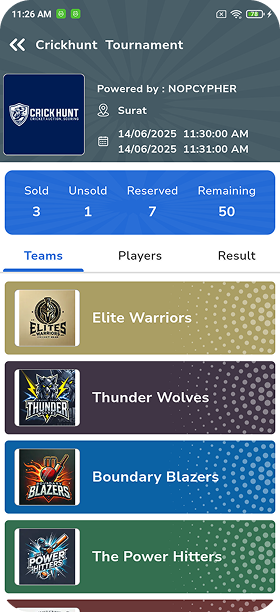
CrickHunt offers online cricket player auctions with remote bidding and team-owner views, allowing eligible team owners to participate using their phones or laptops. Explore the CrickHunt cricket auction platform to learn more.
3Preparing Match Fixtures and Schedules
Scheduling matches is another major responsibility. Organizers must consider the number of teams, tournament format, ground availability, match duration, and available time slots.
For example, a weekend tournament with eight teams may require several matches in a limited number of hours. A single delay can affect the remaining schedule.
Last-minute changes can also create confusion if players and team representatives are not informed promptly.
Tips for better fixture management
- Finalize the tournament format before preparing fixtures.
- Confirm ground availability and match timings.
- Allocate reasonable time between consecutive matches.
- Share the schedule with all participating teams.
- Establish a process for announcing fixture changes.
- Keep a record of completed, postponed, and upcoming matches.
A clear fixture plan helps everyone understand when and where they need to play. Always communicate changes through an official channel instead of relying on informal conversations.
4Maintaining Accurate Live Cricket Scores
Scoring mistakes can affect the credibility of a tournament. Recording runs, wickets, overs, extras, and individual player performances manually requires concentration, especially when several matches are being played.
A missed delivery, incorrectly recorded extra, or delayed score update can cause confusion among players, spectators, and team representatives.
Tips for accurate cricket scoring
- Assign a responsible scorer to each match.
- Follow a consistent scoring process.
- Record every ball, run, wicket, and applicable extra correctly.
- Check the scorecard regularly during the match.
- Verify the final score and match result before publishing them.
- Keep match records available for future reference.
Digital scoring tools can make scorekeeping more organized by recording match events and displaying score updates.
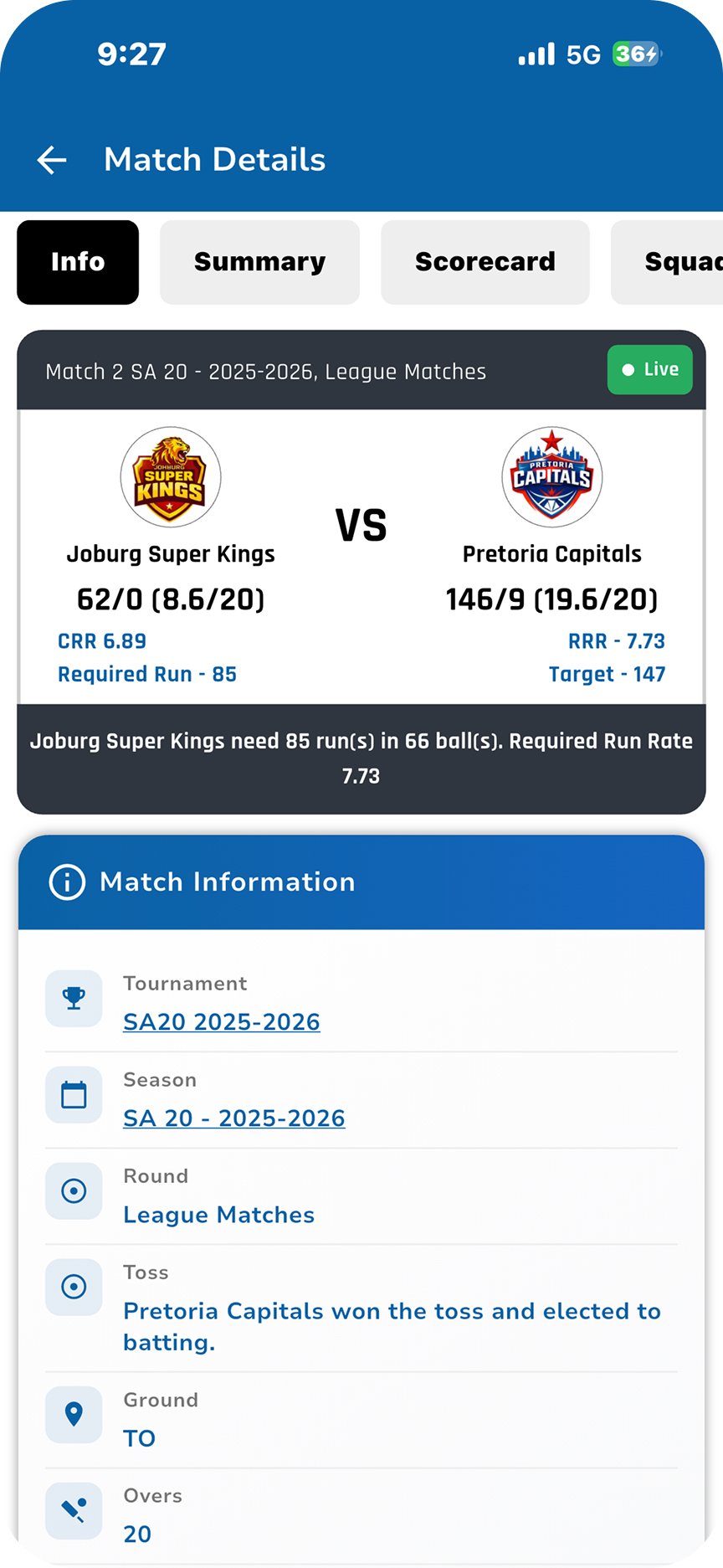
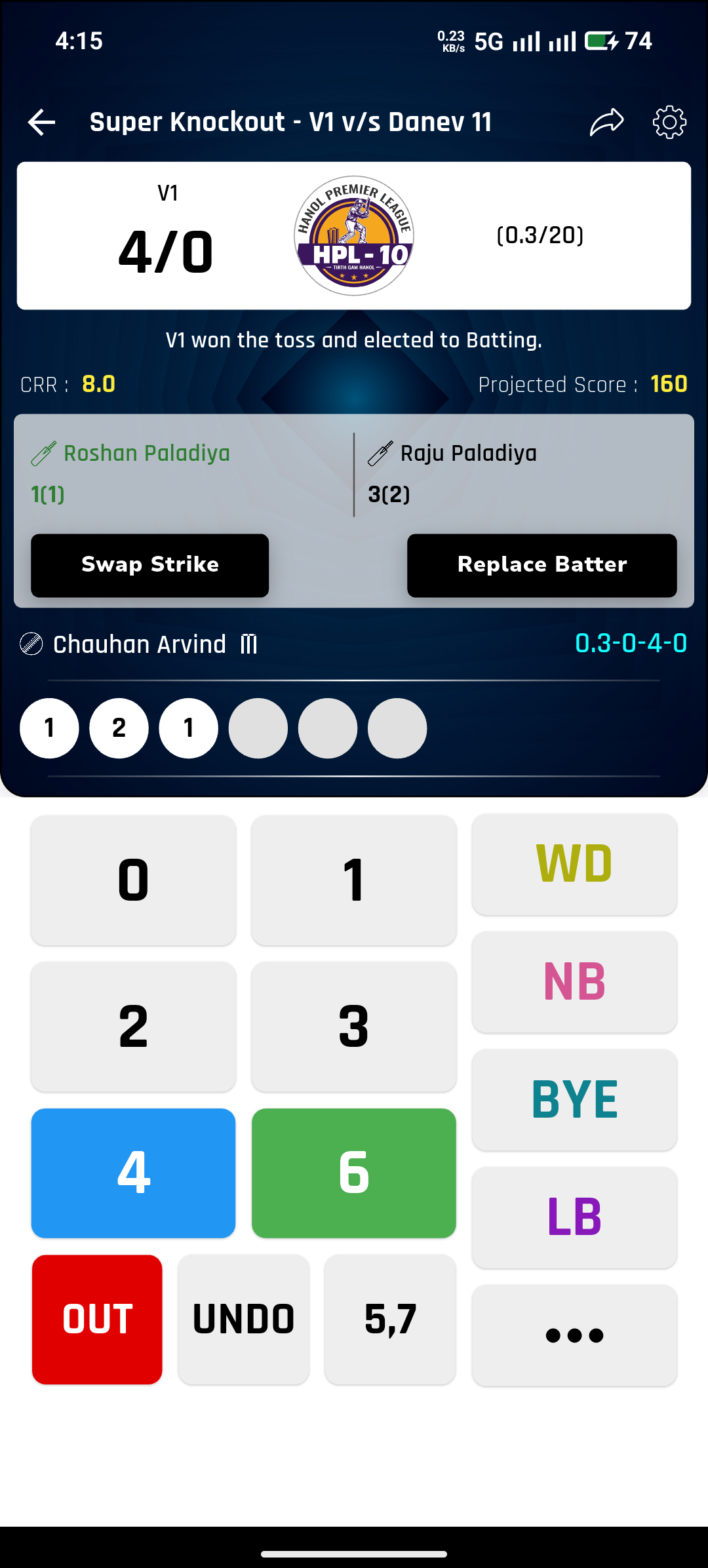
CrickHunt's scoring features include ball-by-ball live scoring, real-time score updates, individual match scoring, match history, and statistics. Its scoring system also supports TV-style score overlays for presenting match information. Learn more on the official CrickHunt website.
5Tracking Points Tables, Statistics, and Results
A tournament does not end when an individual match finishes. Organizers must also maintain results, team standings, and player performance records throughout the competition.
This becomes particularly important in league formats, where several teams play multiple matches before the finalists are determined.
Manually updating standings can become time-consuming, especially when organizers need to review wins, losses, ties, net run rate, or other tournament-specific tie-breakers.
Tips for maintaining reliable tournament records
- Define the points system before the first match.
- Establish tie-breaker rules in advance.
- Record results as soon as they are confirmed.
- Maintain consistent team and player statistics.
- Review standings regularly.
- Check the final table before announcing the qualified teams.
Use digital tools that suit your tournament format and verify that they support the calculations and reports you need.
CrickHunt publishes features for match history, player statistics, and tournament-related scoring information, helping organizers maintain digital records of match activity.
6Coordinating Players, Team Owners, and Organizers
Communication can become one of the biggest problems when a tournament involves multiple teams and different people handling registration, scoring, scheduling, and auction operations.
A change in match timing may reach one team but not another. A team owner may miss an auction update, while a player may be unaware of an important rule.
These situations are often caused by unclear responsibilities and scattered communication rather than a lack of effort.
Tips to improve tournament communication
- Create one official communication channel for announcements.
- Share tournament rules and schedules before the event.
- Assign specific responsibilities to organizers and volunteers.
- Communicate important changes clearly and promptly.
- Keep team representatives informed about relevant updates.
- Confirm that important announcements have reached the intended participants.
For auction-based tournaments, remote bidding can also make participation easier when team owners cannot attend the venue in person.
CrickHunt supports remote bidding and team-owner views, helping owners follow auction activity from their mobile devices or laptops.
7Managing Sponsors and Creating a Professional Experience
Sponsors often play an important role in funding local cricket tournaments. However, managing sponsor commitments, advertisements, event branding, and visibility can create additional work for organizers.
A tournament may have several sponsors, each expecting the agreed visibility during the auction or matches.
Tips for better sponsor management
- Finalize sponsor commitments before the event.
- Decide where sponsor logos and advertisements will appear.
- Prepare consistent tournament branding.
- Confirm sponsor placements with the event team.
- Use suitable digital displays during auctions or live-streamed matches.
- Maintain clear records of sponsor commitments.
CrickHunt provides sponsor advertisement placements on auction screens and premium overlays for auction and scoring live streams. These features can help organizers present sponsor content during supported digital displays.
Always agree on sponsor deliverables in advance so expectations remain clear.
10 Practical Tips for Organizing a Successful Cricket Tournament
Beyond solving individual problems, a few good practices can improve the entire tournament experience.
- 1. Start planning early. Set the tournament dates, format, budget, and registration deadline before promoting the event.
- 2. Establish clear rules. Document player eligibility, match format, substitutions, points, tie-breakers, and disciplinary procedures.
- 3. Prepare a realistic budget. Consider ground rental, equipment, umpires, prizes, refreshments, and other operational expenses.
- 4. Keep player information organized. Maintain accurate records and verify important details before finalizing teams.
- 5. Finalize the fixture schedule. Check venue availability and provide teams with sufficient notice.
- 6. Assign clear responsibilities. Make sure everyone knows who handles scoring, scheduling, registration, and communication.
- 7. Use consistent scoring practices. Record match events accurately and verify the final scorecard.
- 8. Keep communication simple. Share important information through official channels and avoid conflicting announcements.
- 9. Maintain digital records. Store player lists, auction outcomes, match results, and statistics in an organized format.
- 10. Review the tournament afterward. Collect feedback from players, team owners, and volunteers to identify what worked and what needs improvement.
These practices can help make tournament management more predictable, organized, and easier to repeat in future seasons.
Tournament workflow at a glance
Illustrative workflow: how information moves through an auction-based cricket tournament. Not a performance measurement.
- PlayersRegistered and verified
- AuctionBids, purses, squad limits
- TeamsFinal squads confirmed
- MatchesFixtures and venues
- ScoresBall-by-ball records
- StatisticsResults and standings
Manual vs Digital Cricket Tournament Management
Manual management can be sufficient for a small friendly match. However, as the number of teams, players, matches, and administrative requirements increases, keeping everything organized becomes more demanding.
| Tournament activity | Manual management | Digital management |
|---|---|---|
| Player registration | Paper forms and spreadsheets | Digital registration and records |
| Player auctions | Manual bids and calculations | Digital bidding and budget tracking |
| Team formation | Manually maintained player lists | Digital player and team allocation workflows |
| Live scoring | Paper scorebooks | Ball-by-ball digital scoring |
| Match records | Manually compiled reports | Digital match history and available statistics |
| Sponsor displays | Manually coordinated materials | Supported digital auction and scoring overlays |
Digital tools can reduce repetitive work, but they do not replace the need for good planning, responsible officials, accurate information, and clear tournament rules.
The right approach is to choose tools that solve your actual problems rather than adding unnecessary complexity.
How CrickHunt Helps with Cricket Tournament Management
CrickHunt is an online cricket auction and tournament platform designed to help organizers manage important cricket-related workflows digitally.
Instead of relying entirely on separate spreadsheets and manual records, organizers can explore its auction and scoring features according to their requirements.
Online player auctions
Conduct digital player auctions and manage bidding through a structured workflow.
Online player auctions
Instead of manual bids and calculations, organizers run the auction digitally so bids, purses and sold or unsold players stay in one workflow.
Remote bidding
Allow team owners to participate in auctions using their phones or laptops.
Remote bidding
Team owners who cannot reach the venue can still follow the auction and bid, with team-owner views on mobile or laptop.
Player & team management
Organize player information and team allocations during the auction process.
Player & team management
Keep the player pool, squads and allocations together, so final teams can be reviewed straight after the auction.
Live cricket scoring
Record match events ball by ball and display real-time score updates.
Live cricket scoring
Ball-by-ball scoring with real-time updates and individual match scoring replaces paper scorebooks for supported matches.
Match history & statistics
Maintain records of matches and player performances.
Match history & statistics
Scorecards, leaderboards and player statistics stay available after each match, making results easier to review.
Live-streaming overlays
Present auction and scoring information through supported TV-style displays, with sponsor advertising placements.
Live-streaming overlays
Premium overlays for auction and scoring live streams, plus sponsor advertisement placements on auction screens.
These features can be useful for local cricket leagues, franchise-style tournaments, academies, clubs, and organizers looking to make their auction or scoring process more organized. Feature availability can differ by plan.
To explore the platform and its available features, visit CrickHunt.com.
How Much Does Cricket Auction Software Cost?
Pricing is an important consideration when choosing software for a cricket tournament. The right plan depends on the number of teams participating and the features your event requires.
According to CrickHunt's published auction pricing page, the listed plans are:
| Plan | Listed price per auction | Team limit |
|---|---|---|
| Standard | Free | Up to 2 teams |
| Silver | ₹1,500 | Up to 4 teams |
| Gold | ₹2,000 | Up to 7 teams |
| Platinum | ₹3,000 | Up to 11 teams |
| Diamond | ₹4,500 | Up to 17 teams |
| Elite | ₹6,000 | Up to 30 teams |
These prices relate to CrickHunt's published auction plans, not necessarily every service involved in running a complete cricket tournament. Check the official CrickHunt pricing page for current prices, inclusions, and applicable terms before making a decision.
If you are organizing a school, college, or institute tournament and want to conduct it for free, contact CrickHunt to confirm the applicable eligibility requirements and free-tournament arrangements.
Frequently Asked Questions About Cricket Tournament Management
What is cricket tournament management?
Cricket tournament management involves planning and organizing a cricket competition, including player registration, team formation, match scheduling, scoring, result tracking, and tournament administration.
What are the biggest challenges in cricket tournament management?
The most common challenges include managing player registrations, forming balanced teams, conducting auctions, preparing fixtures, maintaining accurate live scores, communicating changes, and tracking tournament results.
How can I manage a cricket tournament more efficiently?
Start with clear tournament rules, a realistic budget, and a confirmed schedule. Assign responsibilities to your team, maintain accurate records, communicate through official channels, and use suitable digital tools for tasks such as auctions and scoring.
What is cricket tournament management software?
Cricket tournament management software helps organizers manage selected tournament activities digitally. Depending on the platform, features may include player and team management, auctions, live scoring, match history, statistics, and tournament reports.
Does CrickHunt support live cricket scoring?
Yes. CrickHunt publishes scoring features that include ball-by-ball live scoring, real-time score updates, individual match scoring, match history, and statistics. Check the official website for the latest availability and details.
Can team owners participate in a cricket auction remotely?
Yes. CrickHunt offers remote bidding that allows team owners to participate in player auctions using a mobile phone or laptop, without necessarily attending the auction venue in person.
Is CrickHunt free for small cricket tournaments?
CrickHunt lists a free Standard auction plan for up to two teams. Other plans have different team limits and prices. Organizers should review the official pricing page to understand the applicable terms.
Can schools and colleges organize cricket tournaments using CrickHunt?
Schools and colleges can contact CrickHunt to discuss their tournament requirements and confirm the eligibility and terms of any available free-tournament offer.
Conclusion
Managing a cricket tournament involves much more than bringing players onto a ground. Organizers need to coordinate registrations, teams, fixtures, scoring, communication, sponsors, and results while ensuring that players have a fair and enjoyable experience.
The best way to handle these challenges is to plan early, establish clear rules, assign responsibilities, and maintain accurate records throughout the tournament.
Digital tools can make several tasks easier, particularly player auctions, remote bidding, live scoring, and match record management.
If you are planning your next local league, academy competition, corporate tournament, or franchise-style cricket event, explore CrickHunt to discover how its digital auction and scoring features can support your tournament workflow.
Plan better. Manage smarter. Make every match count with CrickHunt.
Planning Your Next Cricket Tournament?
Organize your workflow, keep match information accessible, and explore digital tools for cricket auctions and live scoring.